Thanks to our friend Willem (@PD0WM) message on X, we can complete this thread with a resource I didn’t mentioned at all: Renesas RH850 Voltage Glitching
Jerin Sunny and Shakir Zari from FEV Secure Lab (FEV India) published Unlocking Renesas RH850/F1L Security with Voltage Glitching in 2024, and they’re working on a real production ECU from the start: a Body Control Module (BCM) pulled from a vehicle.
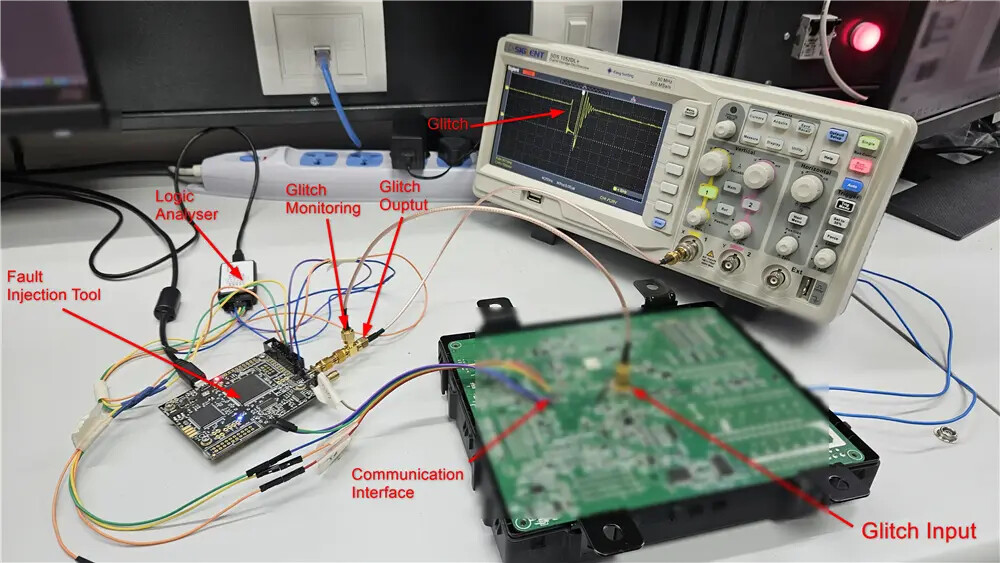
(source: Renesas RH850 Voltage Glitching)
Target & reconnaissance
The BCM contains an RH850/F1L: yet another family member not seen in the other research, adding a 3rd distinct RH850 variant to the timeline (alongside the P1M-E and the F1KM-S4). They first tried to extract memory via the CAN interface, found it protected behind Security Access. Physical disassembly followed, then connectivity via the JTAG pins and a Renesas E1 debugger, which promptly asked for the 16-byte ID Code. Common codes were tried, all failed. So, same as everyone else in this timeline: fault injection it is.
Protocol analysis
They replicated the same 2-wire UART approach: FLMD0 pulled high, logic analyser on the lines, full decode of the RFP command sequence. Notably they document the exact flow clearly: sync zeros → device info → clock frequencies → bitrate (9600) → serial programming check → ID Code Check command (16 bytes). Useful reference if you’re building your own tooling! 
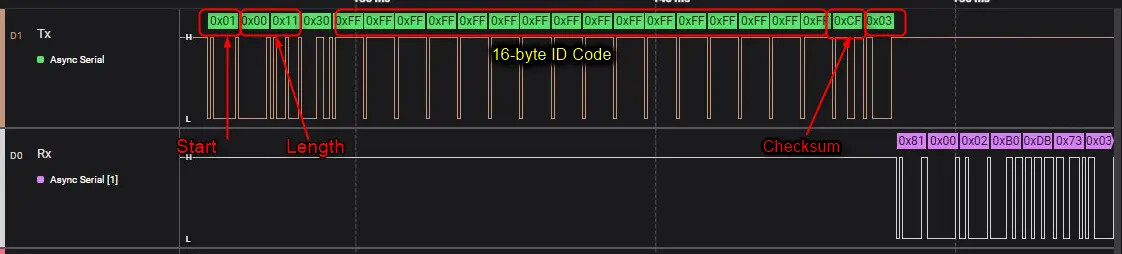
(source: Renesas RH850 Voltage Glitching)
Hardware setup: CW Lite + a hardware mod
Here’s where it gets interesting. They used a ChipWhisperer Lite, the entry-level model, cheaper than the Husky used by CCSW and Quarkslab with the glitch output connected to ISOVCL.
Decoupling caps on ISOVCL were replaced (not just removed) with custom values chosen to shape the glitch profile more precisely.
The CW Lite doesn’t give precise enough control over glitch voltage levels out of the box, the crowbar was pulling too hard or inconsistently. So they claim having fixed the CW Lite circuitry** to regain voltage precision.
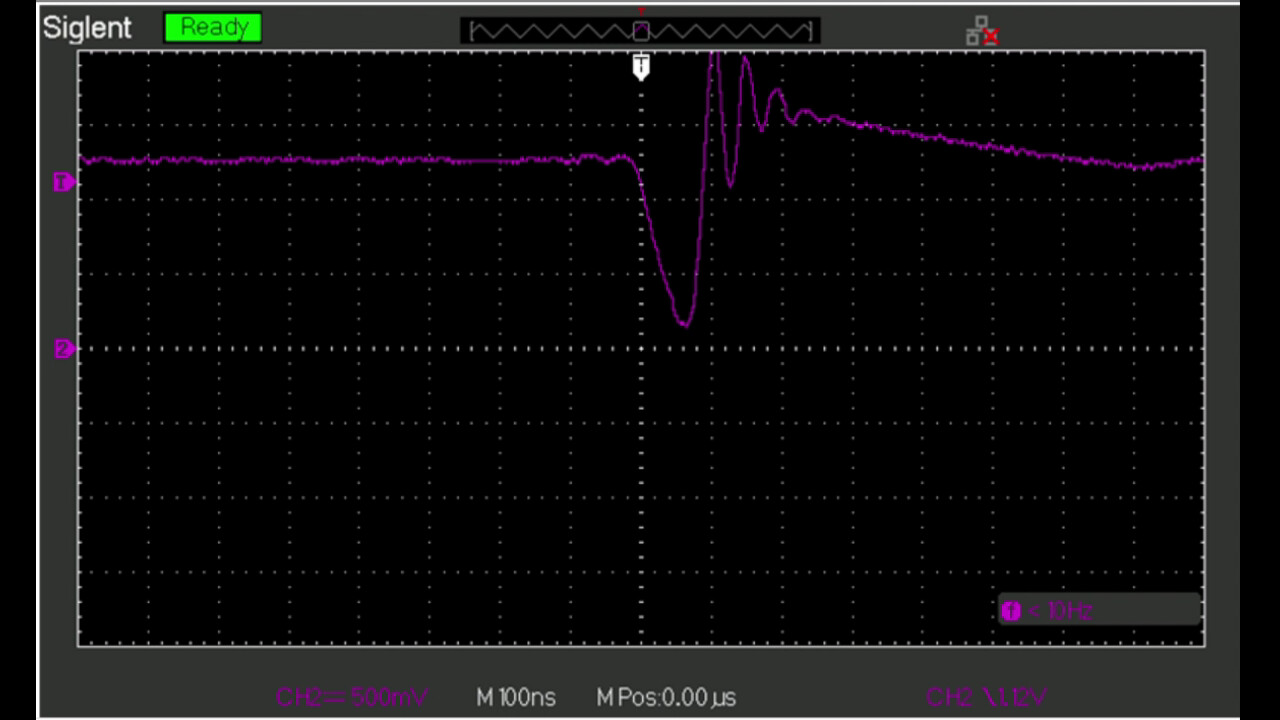
(source: Renesas RH850 Voltage Glitching)
The post is a little vague about this modification, but it is worth to mention the CW Lite crowbar is binary by design. The most common fix for this is adding a series resistor on the crowbar path between the MOSFET drain, and the SMA glitch output to limit the effective short-circuit current, and produce a softer, shallower voltage droop rather than a hard rail-to-GND. A second possibility is that they modified the target supply voltage path, reducing VTARGET so that the same crowbar depth produces a proportionally gentler glitch. This is essentially what the Pico Glitcher v3’s 1.2V/1.8V/3.3V/5V multiplexed supply achieves programmatically.
Results
Firmware extracted, but one successful glitch isn’t enough to dump the full memory, the target stops responding mid-read, requiring multiple successful glitches to pull the complete code flash and data flash. Once done, they pack the data into a binary by stripping RFP command metadata.
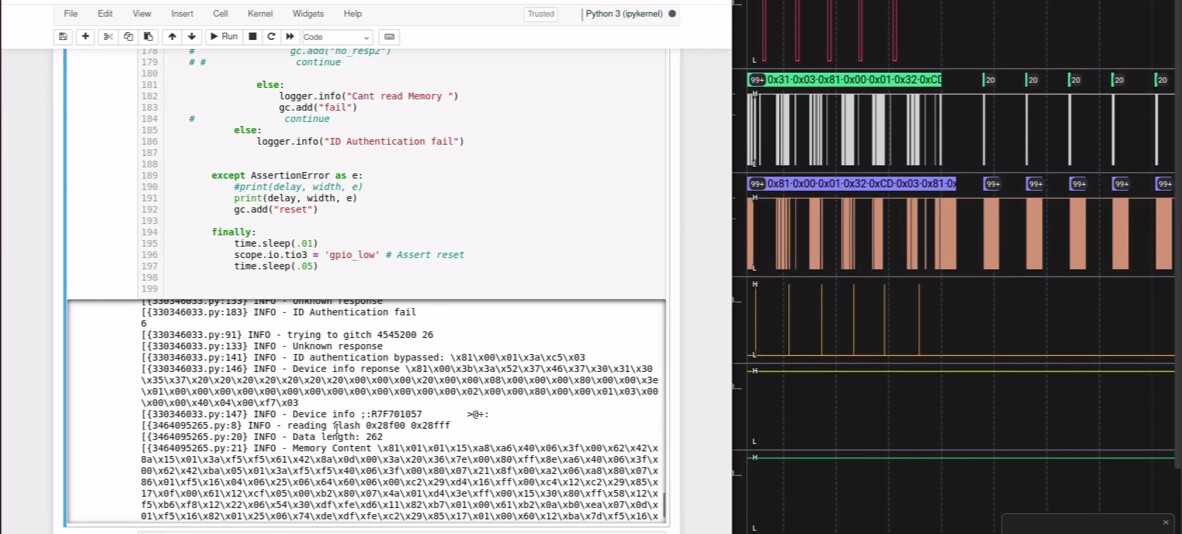
(source: Renesas RH850 Voltage Glitching)
Then the firmware reversing starts. And this is where this entry stands alone in the timeline:
- Found secret keys used to unlock Secure Diagnostic Services
- With security access bypassed: ability to control vehicle actions
Full end-to-end, from soldering to vehicle control. All vulnerabilities were privately disclosed to the manufacturer and patched.
It’s very interesting post!